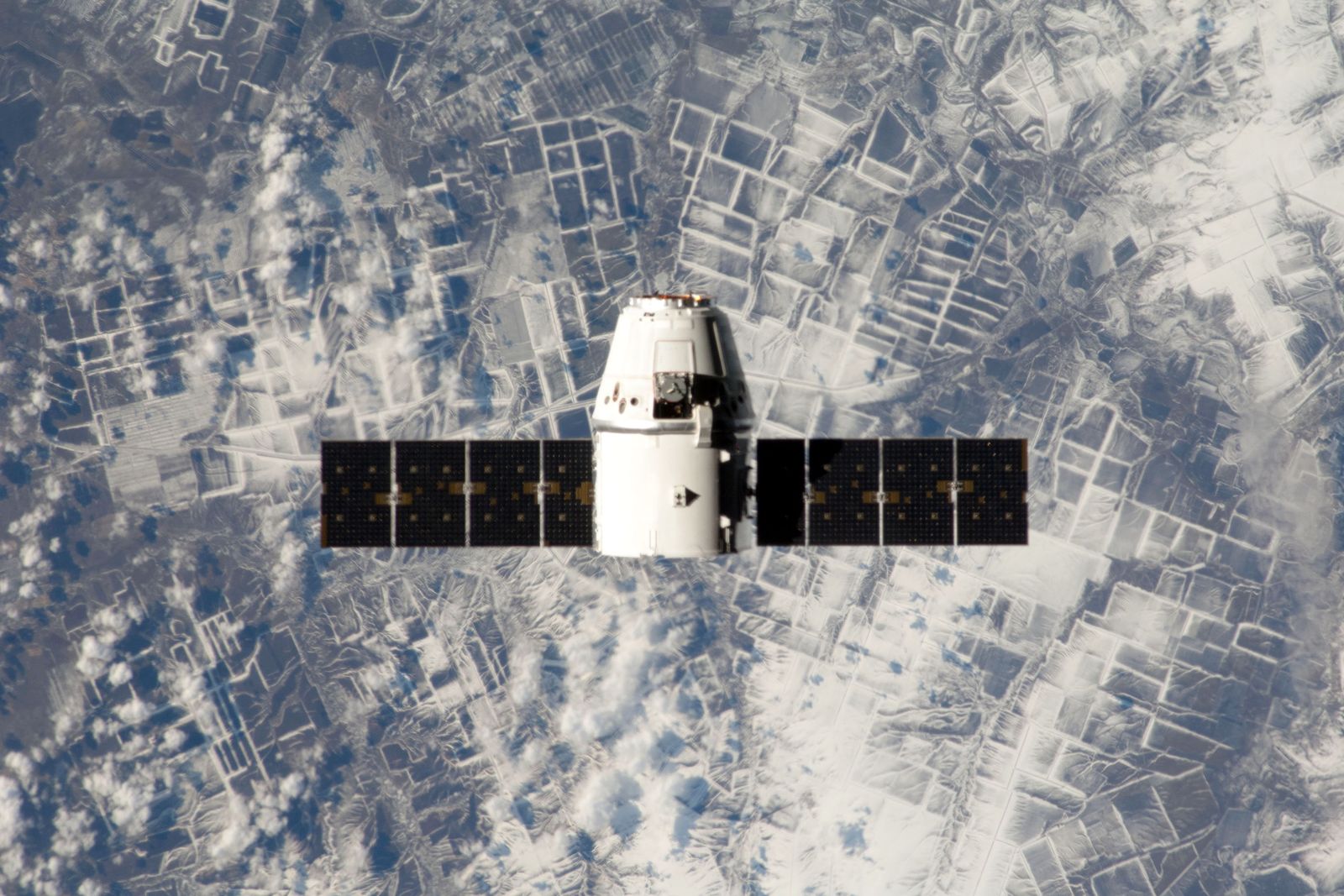
Moving image processing from a ground server to a satellite could cut the volume of data sent to Earth. For an Indian agriculture, mining or mapping team, the question is narrower: can an orbital-computing service produce a useful result for one area, within a dependable time window, at a defensible cost?
TakeMe2Space’s MOI-1A mission gives prospective users a reason to frame that test. The launch is scheduled, not completed, so procurement decisions should wait for evidence from orbit.
What the MOI-1A announcement establishes
A Reuters report published by ETTelecom says the Indian startup plans to launch MOI-1A on SpaceX’s Transporter-18 rideshare mission on 1 October 2026. It describes a satellite using Nvidia Orin NX processors to run containerised models in orbit and transmit processed output instead of all the raw imagery. The report also says the company has signed 23 customers.
Those facts do not prove that a particular model, location or delivery deadline will work. A successful launch clears only the first gate; commissioning, calibration, processing and downlink performance still need evidence.
Start with the decision, not the hardware headline
Orbital computing is most plausible when transmitting raw data is a material constraint and a smaller derived result is enough. A crop-monitoring team might want a cloud-free vegetation alert, while a mine operator might want a change flag for selected coordinates. Neither buyer benefits unless the output fits an existing workflow.
Write the pilot decision first: “We will expand only if the service detects the agreed condition over the agreed area, delivers it within the required window and preserves evidence for our analyst.” This stops a demonstration from quietly becoming a production commitment.
Choose one workload that can fail safely
The first workload should be narrow, measurable and non-critical. Avoid using an early pilot as the sole input for lending, insurance, public safety or regulatory action. Those decisions need stronger validation and specialist oversight.
Illustrative example: an agritech company selects 20 known plots across two districts and asks the service to identify a defined vegetation change. Analysts compare the output with a trusted reference dataset and field observations. This is a test design, not a claim that MOI-1A has delivered the result.
Fix the model version, area, acceptable cloud conditions and output schema in advance. Otherwise, a team can keep adjusting the test until an attractive result appears.
Use an evidence matrix after commissioning
Ask the supplier to fill this matrix with artefacts from the operating mission, not forecasts.
| Question | Evidence to request | Stop signal |
|---|---|---|
| Did the workload run in orbit? | Timestamped job record, model hash and spacecraft identifier | No way to distinguish orbital processing from a ground rerun |
| Was the image usable? | Capture time, location, bands, cloud assessment and calibration note | Input quality is omitted from accuracy claims |
| Was delivery timely? | Capture-to-result timings across several passes | Only a best-case demonstration is supplied |
| Was the result accurate? | Pre-agreed validation set, false-positive and missed-detection results | A single overall score hides important errors |
| Can the job be repeated? | Run history, failure reasons and retry behaviour | Outputs cannot be tied to a model and configuration |
IndiaPress Live’s guide to reading IIT Delhi’s micro-GPU prototype applies the same distinction between a component demonstration and an operational product.
Compare the full workflow with ground processing
Measure the journey from task submission to a result entering the customer’s system: acquisition opportunity, queue, processing, downlink, delivery, validation and correction.
Run the same sample through the ground workflow. Compare useful outputs per rupee, delivery consistency and analyst effort. Agree which raw data, intermediate output and logs remain available for audit or later analysis.
Set boundaries for models, data and access
Uploading a container is a software-supply-chain decision. Record who can replace a model, how an image is authenticated, which libraries are permitted and whether network access exists during execution. Define retention for models, imagery, output and logs.
The IndiaPress24 checklist on limiting AI tools to approved records and actions offers a relevant principle: grant only the access required for one pilot. Apply the same restraint to geospatial datasets and model artefacts.
Agree on failure and exit before the first run
A launch delay, missed pass or processing fault should not leave a team guessing. Specify failure reports, ground-processing fallback, service-credit conditions and how customers retrieve their models and results after the pilot.
Keep a human analyst in the approval path. If the pilot affects a high-impact decision, require independent technical and domain review before wider use.
A five-gate pilot decision
- Mission gate: the spacecraft is commissioned and the relevant payload is operating.
- Data gate: imagery and metadata meet the use case’s minimum quality.
- Model gate: agreed error measures hold across representative samples.
- Operations gate: delivery, retry, support and audit records work repeatedly.
- Economics gate: the end-to-end workflow improves cost, time or capability against the ground baseline.
Pass every gate before scaling. A failed gate means narrow the workload, change the fallback or stop without expanding sunk cost.
Conclusion
MOI-1A may make orbital computing tangible for Indian teams, but the sensible buying moment comes after verifiable in-orbit performance. Begin with one reversible workload, preserve a ground baseline and require evidence for accuracy, timing, access and repeatability. If the complete workflow wins—not just the hardware story—the team has a reason to proceed.